Showing posts with label Rodent. Show all posts

Tuesday, March 22, 2011

Squirrel


True Wild Life | Squirrel | There are many different species of squirrel natively found in the Americas, Europe, Asia and Africa. Squirrels are small rodents generally between 10 cm and 20 cm tall, although some species of squirrel like marmots and prairie dogs around the size of a small beaver. The red squirrel native to the United Kingdom is rapidly becoming extinct due to the rise in eastern grey squirrel numbers. In the UK grey squirrels are classed as vermin so it is illegal to release any into the wild as the grey squirrel destroys the habitats of the smaller native red squirrel.


There are around 50 species of flying squirrel found in tree tops worldwide. These flying squirrels cannot fly as such, but more jump and glide to their destination, with the flying squirrel able to use its shorter tail to help it balance.


There are about six species of ground squirrel still found mainly in America with the exception of the African ground squirrel which resembles a small meerkat. Marmots and prairie dogs can grow to up to 60 cm in length and live for more than 20 years in captivity.


Squirrels eat nuts, berries, shoots and occasionally insects. Most species of squirrel hibernates during the colder winter months, with the squirrels beginning to store food in their dens during the autumn in preparation for the winter.

Tuesday, March 15, 2011

Rat


True Wild Life | Rat | The two most common species of rat are the black rat and the brown rat. Both species of rat are found in all parts of the world. The rat is generally found in small, dark places and is thought to have originated in Asia before migrating across countries and being accidental passengers on human voyages. The rat is now one of the most widely spread and adaptable animals in the world. The rat is a small scavenger mammal that has proved to be a pest in both urban and rural areas where rats are normally present due to an abundance of food. Rats are known to kill smaller livestock on farms, and there is the myth that you are only ever 5ft away from a rat at anytime.


The rat can also carry and spread disease to a devastating effect although diseases carried by rats are generally not passed on to humans. However, in the middle ages, the black plague wiped out nearly two thirds of the European population. The disease was not caused by the rats directly but was actually caused by infected fleas carried on rats. The most distinctive difference between rats and mice is their size. Rats tend to be much larger than mice and it is because of this that new rodent species that are discovered are easily classified as rats or mice.


In the wild, rats are preyed upon by many different animals including snakes, wildcats and birds of prey. In some cultures rats are hunted and eaten as food by humans. The bandicoot rat is a stable and popular food source in parts of Southeast Asia but it is thought that the eating of rats has not become popular elsewhere due to the eating of rats being socially acceptable in other cultures. Today, rats are commonly kept as pets all over the world and are thought to have been bred as pets since the 1800s. Pet rats pose the same health risks to humans as other household animals so are not seen to carry harmful diseases. When tame, rats can be extremely friendly and can be taught to perform selective tasks such as doing certain actions in order to get food.


Rats are fast breeders and give birth to large litters of baby rats meaning that pet rats of different sexes should be separated at around a month old. Rats are able to start having babies at around 5 weeks of age and female rats give birth to litters of between 6 and 10 baby rats after a gestation period of 22 days.Although rats can live until they are 4 or 5 years old, female rats can no longer have babies after they are about 18 months old. Rats are omnivorous animals and eat a mixture of plant and animal matter in order to get all the right nutrients. Rats are known to eat almost anything and the high rubbish levels in cities, as given way to a new generation of over sized super rats. The large rats are much bigger than the average rat and are more dominant in their environment meaning that the smaller rat species tend to suffer as a consequence.

Sunday, March 13, 2011

Porcupine


True Wild Life | Porcupine | The porcupine is one of the worlds largest rodents, with porcupines weighing around 12 kg. The porcupine is thought to be from the same family as the hedgehog but the DNA of the porcupine is not as old as that of the hedgehog. The porcupine is found inhabiting the forests and jungles of Asia, Europe, parts of Africa, and both North and South America. The porcupine feeds on insects and occasionally small reptiles and eggs.


Like its ancestor the hedgehog, the porcupine has a coat of long spikes to protect itself from danger. The porcupine spikes are much longer than those of the hedgehog, with the spikes from a porcupine often containing poison. There are nearly 30 different species of porcupine found in their native habitats around the world. The porcupine can vary in size from a tiny 1 kg porcupine in South America to the enormous 10 kg porcupine in Africa. Porcupines tend to be brown and grey in colour, but some of the rarer porcupine species can be found in white.


The sharp, needle-like quills of the porcupine are about 7 cm long and can be detached very easily. The attacker of a porcupine can easily end up with sharp quills in their skin which are venomous and very difficult (not to mention painful) to extract. It has been known for large predators be die as a result of the quills of the porcupine, generally from infection.


Porcupines are very vocal during mating season and the gestation period is about 7 months, when only one porcupine pup is born. Newborn porcupine pups weigh around 450 g and are about 25 cm (10 inches) long. The young porcupines are born with fully functional quills and the porcupine pup will stay with its mother for about 6 months.

Sunday, March 6, 2011

Mouse


True Wild Life | Mouse | The mouse is a small rodent that is spread widely throughout nearly every country. The mouse is found in all corners of the globe, including parts of Antarctica. Many people today like to keep the mouse as pets because of the small size and quiet temperament of the mouse. The mouse is also used a lot in scientific research though the mouse is not an easy animal to examine.


The mouse is often easy prey around the world for small mammals, birds and reptiles. Due to this the mouse generally does not live for much longer than a few months in the wild, mainly because the mouse is small easy prey for many mammals and birds. The mouse though has been known to get up to a few years old when kept as a pet.


Mice can be harmful pests at times, through damaging and eating crops and spreading diseases through their parasites and feces. It is because of the pest problems caused by mice, that domestic cats are thought to have been introduced into common households.


The gestation period in female mice is less than a month, and the female mouse has an average litter size of about six baby mice, although the mouse litter size is commonly higher than six. The baby mice are known as pups and these mice pups are born with no hair and with their eyes and ears closed. Mouse babies are weaned when they are around three weeks old. There are nearly 40 different known species of mouse found throughout the world. The different mouse species range in size and colour that is generally dependent on their environment.

Saturday, March 5, 2011

Mongoose


True Wild Life | Mongoose | The mongoose is a small rodent-like mammal, the mongoose is similar in appearance to the meerkat and the weasel. Mongoose are naturally found in Asia, Africa and parts of Europe but the mongoose has also been artificially introduced to the Caribbean in more recent times. The mongoose is an omnivore, meaning that mongoose eat both plants and animals. The mongoose in Africa has caught the attention of humans, as they appear to be almost immune the poison of a snake.


The mongoose is slightly lighter than the weasel, meaning that the mongoose is able to avert danger more readily than a weasel as a mongoose is able to see oncoming predators with greater ease. There are thought to be around 30 different species of mongoose, some of which will only fend for themselves while other species of mongoose work together as a team. The different species of mongoose also vary in size ranging from less than 1 foot to nearly three foot in height.


Many species of mongoose have adapted to their particular habitat as some species of mongoose are found to live in the tops of trees where other species of mongoose have adapted to living partially in the water. A number of mongoose species are also known to have patterned fur or ringed tails, this however is not the case with every species of mongoose. The typical mongoose has a long-shaped face and body, short legs and little round ears. Many mongoose individuals are found living in burrows which the mongoose tend to dig themselves, the mongoose however, will not pass up the opportunity to hide in an abandoned burrow of another small animal.


The female mongoose tends to produce only one litter of pups a year, but she is able to produce another litter if for some reason, the first litter is lost. The young mongooses are weaned at around 6 weeks old, and the baby mongooses then begin to forage with their mother until they are 4 months old. The male mongoose babies will leave their mother when they are around 6 months old, while the female mongoose babies will stay longer, sometimes even permanently.

Tuesday, March 1, 2011

Indian Palm Squirrel


True Wild Life | Indian Palm Squirrel | Indian Palm Squirrels are also known as the 3 stripe squirrel due to the mix of dark and white stripes on the back of the Indian palm squirrel. The Indian palm squirrel can be found nesting in the tree tops of exotic trees. The Indian palm squirrel is only naturally found in parts of India and Sri Lanka. Recent accidental introduction of the Indian palm squirrel into western Australia has made them a pest as the Indian palm squirrel has no real natural predators which has made the population of Indian palm squirrels in Australia thrive.


The Indian palm squirrel naturally hunts for small mammals, birds and insects but the Indian palm squirrel has caused problems in recent years as the Indian palm squirrel has taken to eating crops. An Indian palm squirrel only weighs around 100g making the squirrel easy prey for small meat-eating mammals and birds. The Indian palm squirrel has often been reported going into peoples houses and the Indian palm squirrel can often be seen running up and down trees and houses.


Unlike other species of squirrel, the Indian palm squirrel does not hibernate in winter but instead the Indian palm squirrels will only emerge from the warmth of their nests during the afternoon on sunny days.


Indian palm squirrels create nests made up from grass and it is in the these nests that Indian palm squirrels give birth to and wean their young. Typically Indian palm squirrels give birth to 2 or 3 baby Indian palm squirrels which are weaned by the mother Indian palm squirrel until the baby Indian palm squirrel is around 10 weeks old.

Monday, February 28, 2011

Hamster


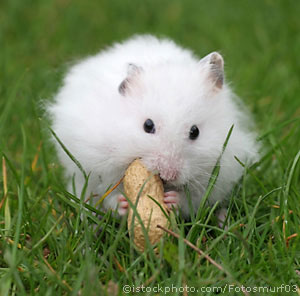
True Wild Life | Hamster | Hamsters are thought to be originally from the desert lands of east Asia, including hamster species such as the common Syrian hamster and the miniature Russian dwarf hamster. Hamsters in the wild tend to spend most of their time digging and foraging for food. Today, hamsters are commonly kept as pets with the average household hamster getting to around 2 or 3 years old. Hamsters are thought to be easy first pets to keep for children due to the hamsters quite nature, small size and calm temperament.


Hamsters are solitary animals. Some types of hamster are so solitary that they will fight to the death if more than one hamster is in the same territory. Hamsters in the wild are nocturnal animals as the hamsters spend the daytime hours in burrows underground in order for the hamster to avoid the many predators within the natural environment of the hamster.The hamster will leave the safety of its underground burrow in the night when it is dark and the temperature is cooler in order to search for food.


Hamsters use their large cheek pouches to store food that the hamster finds so that the hamster can take the food back to the stash in the underground burrow. Nuts, seeds, vegetables, grass, fruits and berries are all part of the natural diet of the hamster. There are more than 20 different species of hamster found in the wild (and even more in the commercial pet market). The Russian dwarf hamster are among the smallest species of hamster with adult Russian dwarf hamsters rarely growing to more than 10cm in length. The more common Syrian hamster is the largest species of hamster and some Syrian hamster individuals have been known to grow to nearly 30cm long, although the average size of a Syrian hamster is normally around 20cm.


Many species of hamster are very fast at running so that they are able to escape from oncoming predators. Due to the shape and size of the hind feet of the hamster, hamsters are often able to run as quickly backwards as they can forwards, which the allows the hamsters to escape easily in their burrows. Hamsters inhabit semi-desert regions around the world with the soft ground providing an excellent material for the hamster to burrow in. The burrow of a hamster often consists of many tunnels and chambers, including separate areas for the hamster to eat and sleep in.


Hamster Foot Facts
  • The hamster has two front feet that are shaped more like hands and the hamster uses its front feet to hold and forage for food.
  • The two back feet of the hamster are slightly larger than the front feet and are used to balance and support the hamster when it sits up.
  • The delicate shape of the back feet of the hamster enable the hamster to run not only forwards but also backwards so that the hamster can easily escape into burrows.
  • The hands of the hamster are well adapted to their purpose as they have five toes on each hand, where the feet of the hamster only have three.
  • Hamsters have soft pads on the bottom of their paws that help them to run smoothly, and long nails on the end of each toe which helps the hamster to grip.


Hamster Teeth Facts
  • As hamsters are rodents, their teeth are growing all the time so hamsters must grind their teeth down to stop them from getting too long by gnawing on something hard.
  • Hamsters have 16 teeth that continuously grow to give the hamster an advantage if it loses a tooth.
  • Unlike many other species of animal baby hamsters are born with a full set of teeth and keep the same teeth for their whole lives.
  • Hamsters have cheek pouches that they store food in when they are out foraging and empty their pouches later on so that they can eat their stored food.
  • A hamster is able to carry its own bodyweight in food in its cheeks and takes then creates secret stashes of food to ensure that the hamster never runs out.

Guinea Pig


True Wild Life | Guinea Pig | The guinea pig is found in the Andes mountains in South America, were it is used as a stable food source for the local peoples. Todays domestic guinea pig is thought to be a subspecies of the Andes guinea pig and therefore cannot be found in the wild. The guinea pig is a small furry herbivore that rarely grows to more than 30cm in length. The domestic guinea pig can get to around 6 or 7 years old. A wild guinea pig would probably be about 3 or 4.


All around the world guinea pigs are kept as pets. If treated properly and given the right amount of time and energy, they can become extremely tame.They are a lot of effort and are far from being easy to take care of but they are well worth the effort. The guinea pig tends to communicate through a series of high pitched squeals. Apparently guinea pigs are unable to judge height and distances accurately and should therefore never be left on a bed or table without supervision.


Guinea pigs were thought to have been domesticated and used in South America as a source of food from as early as 5,000 BC and the guinea pig was also often depicted in art and are seen in statues that are from the times of the ancient civilizations of Peru. In some instances the guinea pig is thought to be a supernatural medium and the guinea pig is therefore often used to heal the sick. With the Spanish conquest of South America in the 1500s came the selective breeding of the guinea pig, which has resulted in the diverse variety of guinea pigs that are seen today.


The domestic guinea pigs love to be with at least one other guinea pig, as guinea pigs are very sociable animals. Guinea pigs are also highly territorial and pet owners often find the guinea pig acting strangely after its cage has been cleaned out. Commonly guinea pigs will urinate and will drag their body along the floor of their newly cleaned cage in order to remark their territory. Wild guinea pigs tend to eat grass and small plant matter as the main part of their diet and the continuously growing teeth of the guinea pig are well suited to such a diet. The wild guinea pig is also known to supplement its diet by eating its own feces, soft pellets that are specially produced by the guinea pig so that it can digest the vital nutrients contained within it.


Domestic guinea pigs have a diet that is primarily made up from dried food pellets and the diet of the guinea pig is often bulked out by the guinea pig eating the hay (dried grass) that is put into the cage of the guinea pig, usually as bedding.

Gopher


True Wild Life | Gopher | There are two main species of gopher, the pocket gopher and the Richardsons ground squirrel, both of these species of gopher are found in North America. The gopher is a small squirrel-like rodent which lives in burrows underground. The gopher digs large networks of tunnels and subterranean chambers which are referred to as gopher towns. These gopher towns contain an extensive network of tunnels that often result in the disruption of agriculture and landscapes.


The gopher towns can stretch for vast distances through mountainous terrain and often contain thousands of gopher residents. The adult gophers tend to situate themselves at the front of the gopher town and whistle to the others when the adult gophers spot potential predators or sense nearing danger. Gophers are small animals, usually around 15cm in length and a quarter of a kilogram in weight this however is slightly dependent on the species of gopher.


The gopher is a true hoarding mammal as the gopher stores the food that the gopher finds in its cheek pouches before taking the food back to the gopher burrow, where the gophers are known to collect astonishing amounts of food. The presence of a gopher can be determined by the mound of dirt that can be seen on the surface of the ground. In a similar way to the mole, the tunneling of the gopher creates a large amount of dirt being pushed out behind it, and this therefore creates the gopher mound.


Some species of gopher, such as the Richardsons ground squirrel, are known to hibernate during the cold northern winters. Baby gophers will usually hibernate at the beginning of Autumn in their first year of life, but the adult gophers often begin their hibernation in the middle of the summer, around July time! The gophers hibernate until the spring, when the male gophers emerge from hibernation first in order to establish their territories before the female gophers wake up.


Gophers are omnivorous animals with the diet of the gopher being predominantly comprised of nuts, seeds and berries along with grass, grains and insects which is where the gopher gets the majority of its protein from. The gopher however, has a number of natural predators mainly because of the size and abundance of the gopher in certain areas. The natural predators of the gopher include large birds, badgers and coyotes and of course, the human, who is known to kill the gopher as an agricultural pest.

Wednesday, February 23, 2011

Gerbil


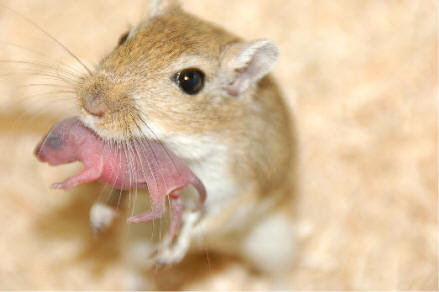
True Wild Life | Gerbil | Gerbils are naturally found in the sandy plains of Africa, Asia and the Middle East. The gerbil was originally known as a desert rat until they were commercially introduced to North America and bred as pets. The gerbil is a small rodent, similar in many ways to by the mouse and the hamster. Gerbils have a long tail like a mouse which the gerbil is able to shed should the tail get trapped. This self defense mechanism allows the gerbil to escape predators, leaving them with just a tail.


Gerbils have sharp claws which the gerbils use to burrow their way into the sandy grounds of the desert. The gerbils are also able to use these underground burrows to get away from danger by quickly disappearing under the sand. There are thought to be more than 100 different species of gerbil that are found in the wild with the majority of these gerbil species being diurnal. However, many gerbils that are kept as pets live a more nocturnal lifestyle meaning that pet gerbils tend to be awake during night time hours more than day time hours.


Wild gerbils are well known for building extensive networks of tunnels that the gerbils are able to hide and breed in. The gerbil only really comes to the surface of the ground when the gerbil needs to find food and water.


The long and releasable tail of the gerbil is around the same length as the gerbils body, but it appears to depend on the individual gerbil species. The gerbil uses its long tail to help the gerbil balance when the gerbil is standing on its hind legs.

Saturday, February 19, 2011

Dormouse


True Wild Life | Dormouse | The dormouse is a small mouse-like rodent predominantly found in Europe. There are 29 different species of dormouse found today, which are most well-known for their long periods of hibernation throughout the cooler winter months. Although the dormouse is mainly found inhabiting areas of dense forest and woodland across Europe, a number of dormouse species also extended their range into the warmer Asian and African continents, where they can be found nesting and foraging in the thick undergrowth, out of sight from predators.


The dormouse, although a generally small rodent species, can grow up to 20 centimetres long depending on the dormouse species. The small body size of the dormouse, allows it to move through the vegetation without being so easily detected. Most dormouse species are very agile and well-adapted to climbing and life in the trees. Dormouse are known to communicate between one another using noises which other dormice pick up using their very sensitive hearing. Many species of dormouse are also nocturnal although not all.


The dormouse is an omnivorous animal meaning that it hunts and feeds on a variety of both plants and other animals. Fruits, nuts, insects, seeds, berries and flowers are the primary sources of food for the dormouse, although the exact diet of the dormouse depends on the species and the area which it inhabits. Due to their relatively small size, the dormouse is preyed upon by numerous predators in it's woodland habitat. Birds such as owls, falcons and small eagles prey on the dormouse from high in the sky, while mammals such as foxes, cats, stoats and weasels hunt the dormouse on ground level.


Once emerged from hibernation in late spring, dormice begin to breed. Female dormice can have more than one litter a year, which generally contains 3 - 5 offspring. Dormouse babies are born after a gestation period of about a month, with no hair and do not open their eyes until they are 2 or 3 weeks old. As with other small rodents, dormice are able to get to five years old, although many are eaten when they are much younger. Today, although the dormouse is not considered to be a vulnerable or endangered species, concerns have been raised over declining dormouse numbers in parts of Europe, particularly the UK, where habitat loss is thought to be the main factor for the demise in dormouse population numbers.